
Arizona Public Records
Arizona public records are open to anyone who wants to see them. The state has one of the most open access laws in the country, and you do not need to give a reason or show ID to request records. County offices, courts, and state agencies all keep public records that you can search online or request in person. This guide shows you how to find Arizona public records from any of the 15 counties or major cities across the state.
Arizona Public Records Quick Facts
Arizona Public Records Law
Arizona law gives everyone the right to see government records. A.R.S. § 39-121 says that public records shall be open to inspection by any person at all times during office hours. You do not need to be a state resident. You do not need to explain why you want the records.
The law covers a wide range of documents. Court filings, property deeds, tax records, meeting minutes, contracts, and emails from public employees all fall under this law. If a government worker made it or received it as part of their job, it is likely a public record in Arizona. The Arizona Supreme Court ruled in Griffis v. Pinal County that records must have a "substantial nexus" to government activity to be public. This broad standard means most government documents are available to you.
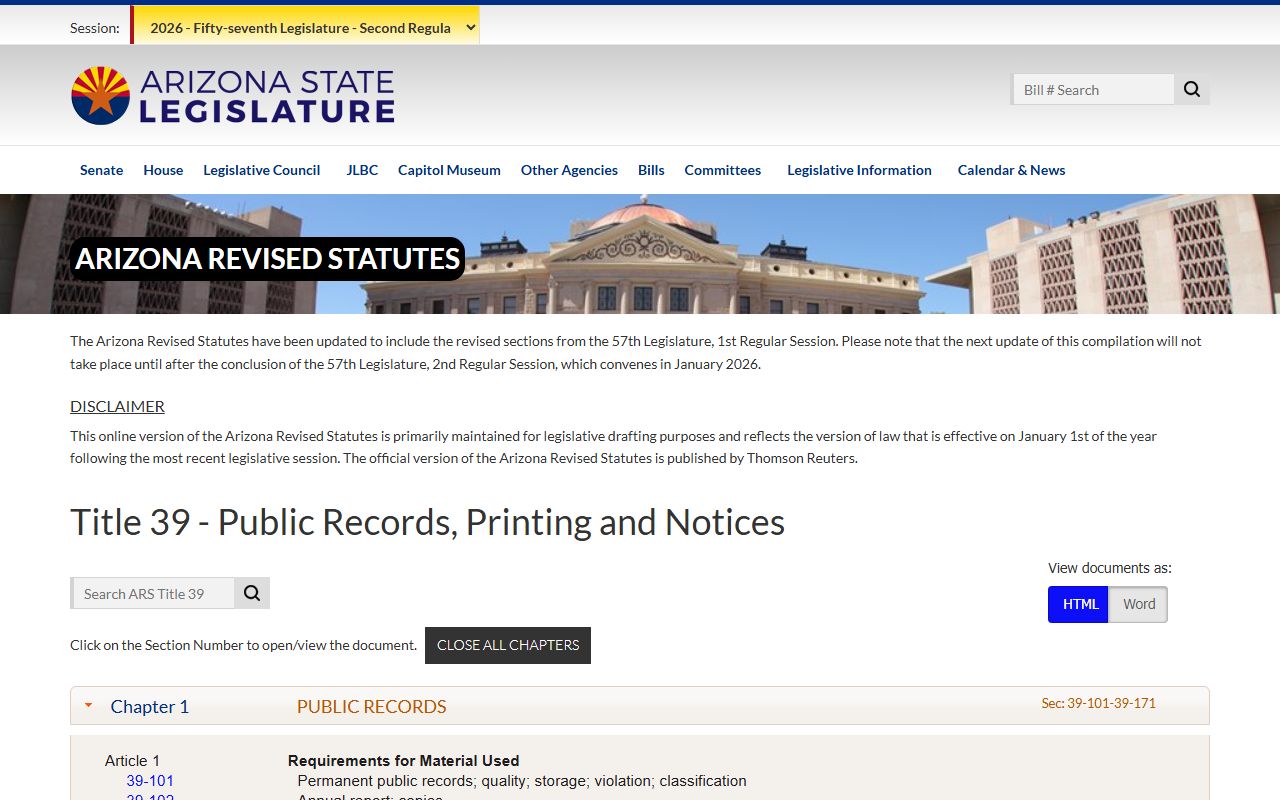
Agencies must respond promptly to your request. Arizona does not set a fixed deadline like some states do. Courts have said this means as fast as the situation allows. If an agency takes too long, you can file a special action in Superior Court. When you win, the court will make the agency pay your legal fees under A.R.S. § 39-121.02.
Note: The Arizona Ombudsman offers free help if you have trouble getting records from a state agency.
Types of Arizona Public Records
Public records in Arizona fall into several main groups. Each type comes from a different office, and some are easier to find online than others. Knowing where to look saves time. Here are the main categories of Arizona public records you can access.
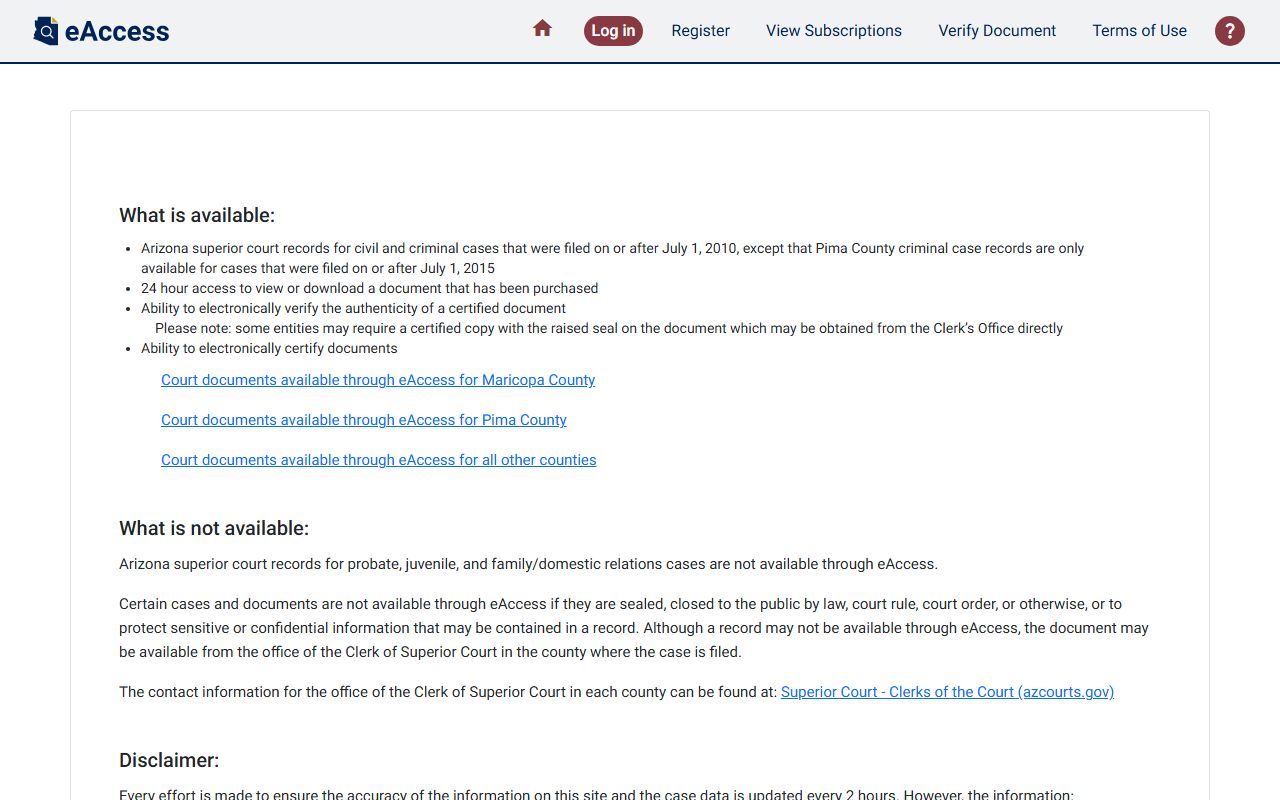
Court records make up a large part of public records in Arizona. Civil cases, criminal cases, family court matters, and probate filings are all part of the court system. The Arizona Courts eAccess portal lets you search Superior Court cases from July 2010 forward. You need to create an account and pay fees to see documents, but basic case info is often free to view. Each county also runs its own court search tools. Maricopa County has a docket search at their Superior Court website, and Pima County offers a justice court case lookup online.
Property records are another common type. County Recorder offices keep deeds, mortgages, liens, and other documents that affect land ownership. County Assessor offices track property values and ownership for tax purposes. Most Arizona counties now have online search tools for these records. You can look up who owns a parcel, see past sales, and find recorded documents without leaving home.
Vital records work differently in Arizona. Birth and death certificates are not fully public. Only family members and certain others can get copies. The Arizona Department of Health Services handles these records. Marriage and divorce records are more open, and you can get them from the Clerk of Superior Court in the county where the event took place.
How to Search Arizona Public Records Online
Many Arizona public records are now online. State agencies and county offices have built search portals that let you find records from your computer or phone. The quality varies by county, but even small rural counties offer some online access now.
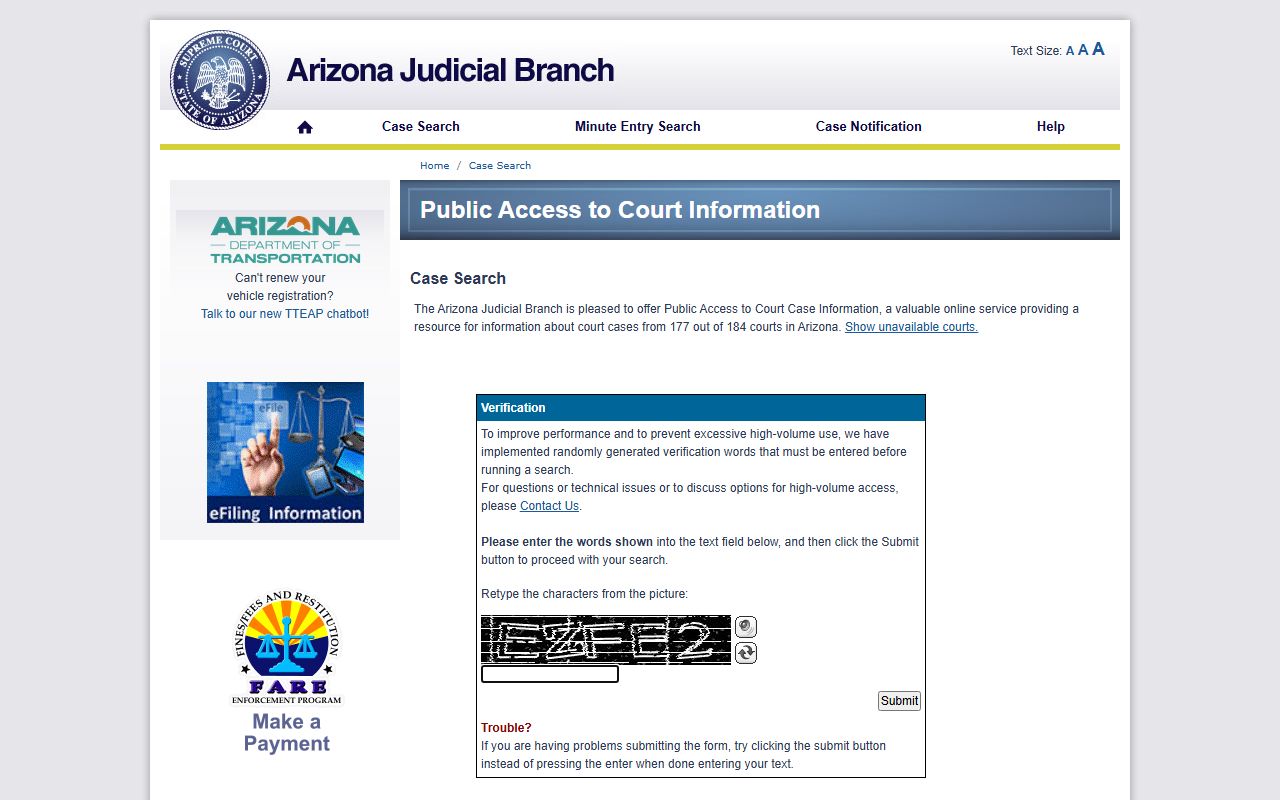
Start with the Arizona Public Access Case Lookup for court records. This free tool covers over 177 justice and municipal courts across the state. Type in a name or case number to find matches. The results show basic case details like filing date, charges, and case status. For more detailed court records from Superior Courts, use the Arizona Courts eAccess system instead. It costs $10 per document or you can buy a subscription if you search often.
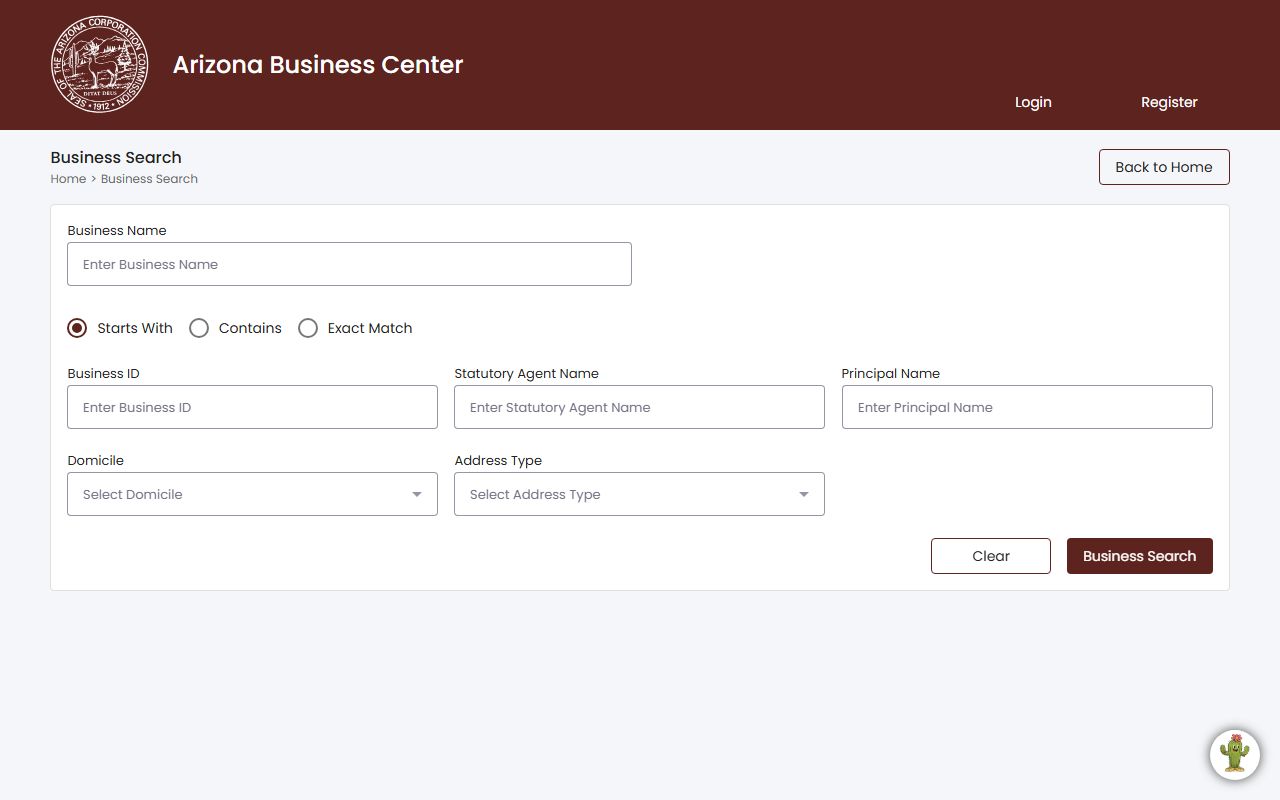
Business records are easy to find online. The Arizona Corporation Commission runs a free search tool for all registered businesses in the state. You can look up LLCs, corporations, and nonprofits. The database shows formation dates, registered agents, and annual report filings. This is useful when you need to verify a company exists or find its official address.
For property records, go directly to the county website. Maricopa County has the largest online database since it holds over half of Arizona's population. Other counties like Pima, Pinal, and Yavapai also have good online tools. Look for links to the Recorder or Assessor on the county home page.
Arizona Public Records by County
Each of Arizona's 15 counties keeps its own public records. The county is where you will find property documents, court filings, and many other records. Some types of records only exist at the county level. Knowing which county you need makes your search faster.
County Recorder offices handle recorded documents. This includes deeds, mortgages, liens, powers of attorney, and other papers that people file to create a public record. When someone buys a house, the deed gets recorded with the County Recorder. When a bank issues a mortgage, that gets recorded too. These records are public, and most counties charge about $1 per page for copies. Certification costs extra, usually $3 per document.
County Assessor offices track property ownership and values. They maintain parcel maps and calculate property taxes. You can search by owner name or address to find property records in Arizona. Most assessor websites also show aerial photos and parcel boundaries. This helps when you need to know exactly what land a record covers. Assessor records are free to view online in most Arizona counties.
The Clerk of Superior Court handles court records at the county level. Civil lawsuits, criminal cases, family court matters, and probate all go through Superior Court. The clerk keeps the official files and can make copies for you. Fees vary by county, but $0.50 per page is common. Some clerks charge a search fee if you ask them to look up records for you.
Note: Maricopa County holds over 60% of Arizona's population, so their offices handle far more records than other counties.
Arizona Criminal Records Access
Criminal records in Arizona come from several sources. Court records show the charges and outcomes of criminal cases. These are public and you can search them online through the court portals mentioned above. But official criminal history records from the state police work differently.
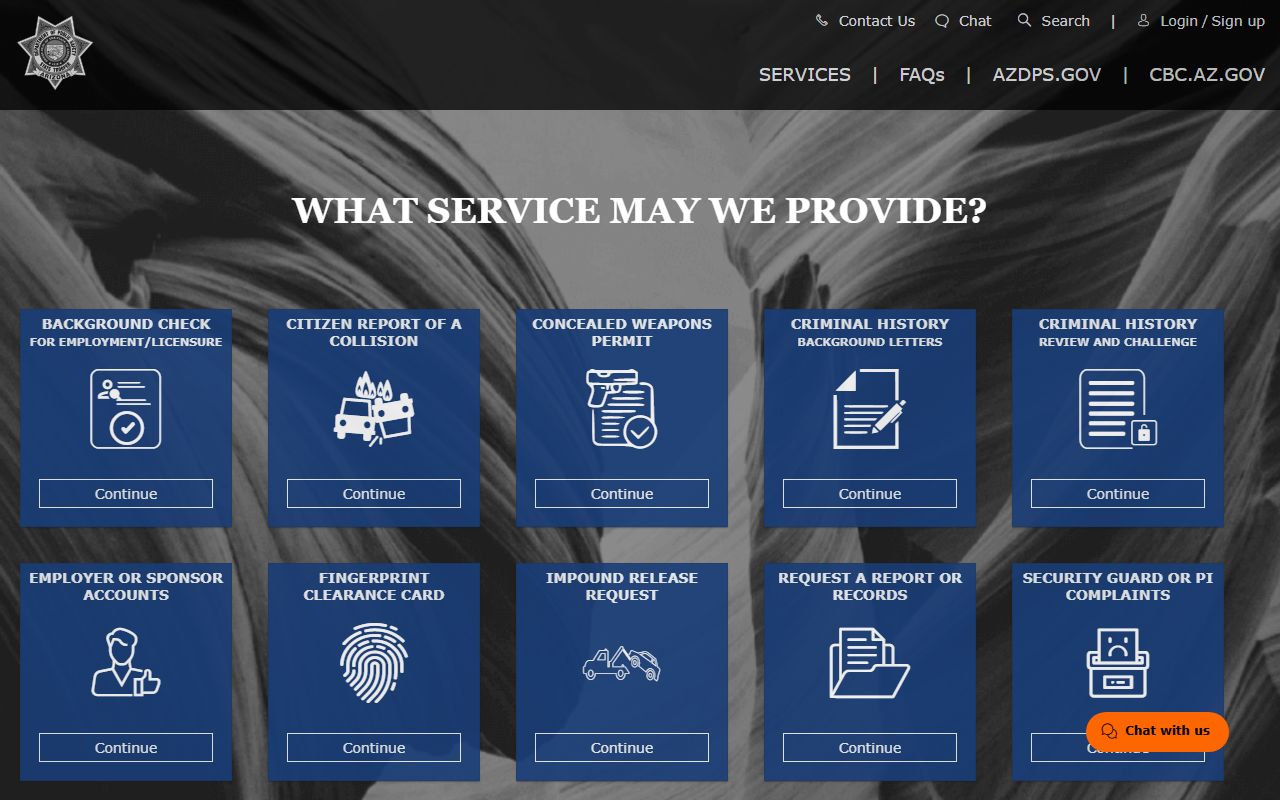
The Arizona Department of Public Safety maintains the state criminal history repository. This is where fingerprint-based background checks come from. Private citizens cannot access these records directly. Only the person themselves, employers with written consent, and certain agencies can get full criminal histories. If you need your own record, you can request a review through DPS.
Court records are your best bet for public criminal record searches. The Arizona Courts eAccess system shows criminal case information including charges, pleas, and sentences. County sheriff websites often have jail rosters that show current inmates. These rosters update daily and are free to view. Maricopa County Sheriff runs a well-known inmate lookup tool that the public uses often.
Arizona Vital Records
Vital records include birth certificates, death certificates, marriage licenses, and divorce decrees. Arizona treats these differently than other public records. Birth and death records have strict access rules, while marriage and divorce records are more open.
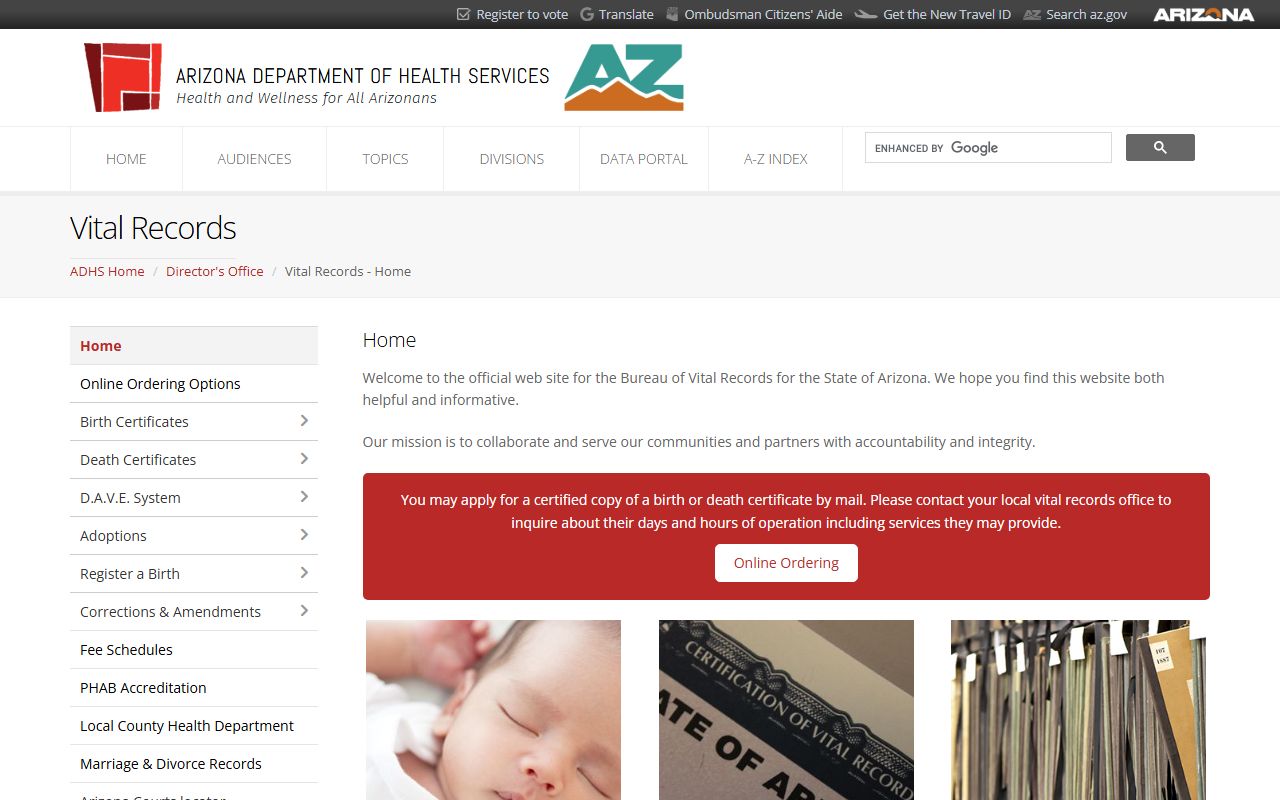
The Arizona Department of Health Services keeps birth and death records from 1909 to present. These are not public records. Only eligible people can get copies. The list includes the person named on the certificate, parents, legal guardians, and certain family members. You must show ID and prove your relationship when you order. Each certified copy costs $20.
Marriage and divorce records come from county courts, not the state health department. The Clerk of Superior Court in each county issues marriage licenses and keeps divorce decrees. These records are more accessible. You can usually get copies even if you are not one of the parties involved. Contact the clerk in the county where the marriage or divorce took place.
Public Records Fees in Arizona
Viewing records in person is always free. Arizona law is clear on this point. Agencies can only charge for copies, not for looking at records. Most people want copies though, and fees add up if you need many pages.
Copy fees follow a standard pattern across Arizona. Most agencies charge between $0.25 and $0.50 per page for regular copies. Certified copies cost more because a clerk must verify the document and add an official stamp. Certification fees range from $3 to $35 depending on the office and document type. Court documents often have the highest certification fees.
Some Arizona public records are free to access online. Many county recorder and assessor databases let you search and view documents at no cost. You only pay if you want to download or print official copies. The statewide court system charges fees for most documents, but basic case lookups are free. Business records at the Corporation Commission are completely free to search and view.
Note: Agencies cannot charge for staff time spent searching for records on non-commercial requests per Attorney General Opinion I13-012.
How to Request Arizona Public Records
You have three main ways to request public records in Arizona: online, by mail, or in person. Many agencies now prefer online requests because they are easier to track and process. But all three methods work.
Online portals are the fastest option for most requests. Large counties like Maricopa and Pima use systems that let you submit requests, track progress, and get records delivered electronically. Maricopa County's portal handles requests for most county departments. Pima County uses a GovQA system at pimacountyaz.mycusthelp.com. Cities often have their own portals too. Phoenix, Tucson, and Scottsdale all accept online requests through their city websites.
Mail requests still work if you prefer paper. Write a letter that describes the records you want. Be specific about dates, names, and document types. Include your contact information and a check for any fees if you know the cost. Send it to the records custodian at the agency that has the records. Response times vary, but agencies must reply promptly under state law.
In-person visits let you see records immediately. Go to the office during business hours and ask to inspect public records. Staff must let you view records right away unless they need time to gather them. You can take notes or photograph records with your phone. If you want copies, ask the clerk and pay the fee. Some offices have self-service copy machines.
Records That Are Not Public
Not everything is public in Arizona. The state has over 300 laws that make certain records confidential. Courts have also created exemptions when privacy interests outweigh the public interest in disclosure. Here are the main types of records you cannot access.
Arizona law protects several categories of records:
- Juvenile court records and adoption files
- Medical records and mental health information
- Student education records
- Tax returns and financial account numbers
- Trade secrets and proprietary business information
- Active criminal investigation files
- Attorney-client communications
Personal information gets some protection too. Agencies often redact Social Security numbers, bank account numbers, and home addresses of certain employees before releasing records. This balances public access with privacy concerns. If an agency denies your request, they must cite the specific law that makes the record confidential.
You can appeal a denial. First, ask the agency to reconsider. If that fails, contact the Arizona Ombudsman for free mediation help. As a last resort, you can file a special action in Superior Court. If you win, the agency pays your attorney fees.
Browse Arizona Public Records by County
Each county maintains its own recorder, assessor, and court offices. Select a county below to find local contact details and online search tools for that area.
Arizona Public Records in Major Cities
Cities handle their own records for municipal matters. Select a city below to find public records resources for that area.